
What to do when returning from Hajj?
The flight home is not the end of Hajj, it's the start of the part most people never plan for. Here's what returning from Hajj actually requires, from the dua at the airport to the habits that decide whether anything changes.
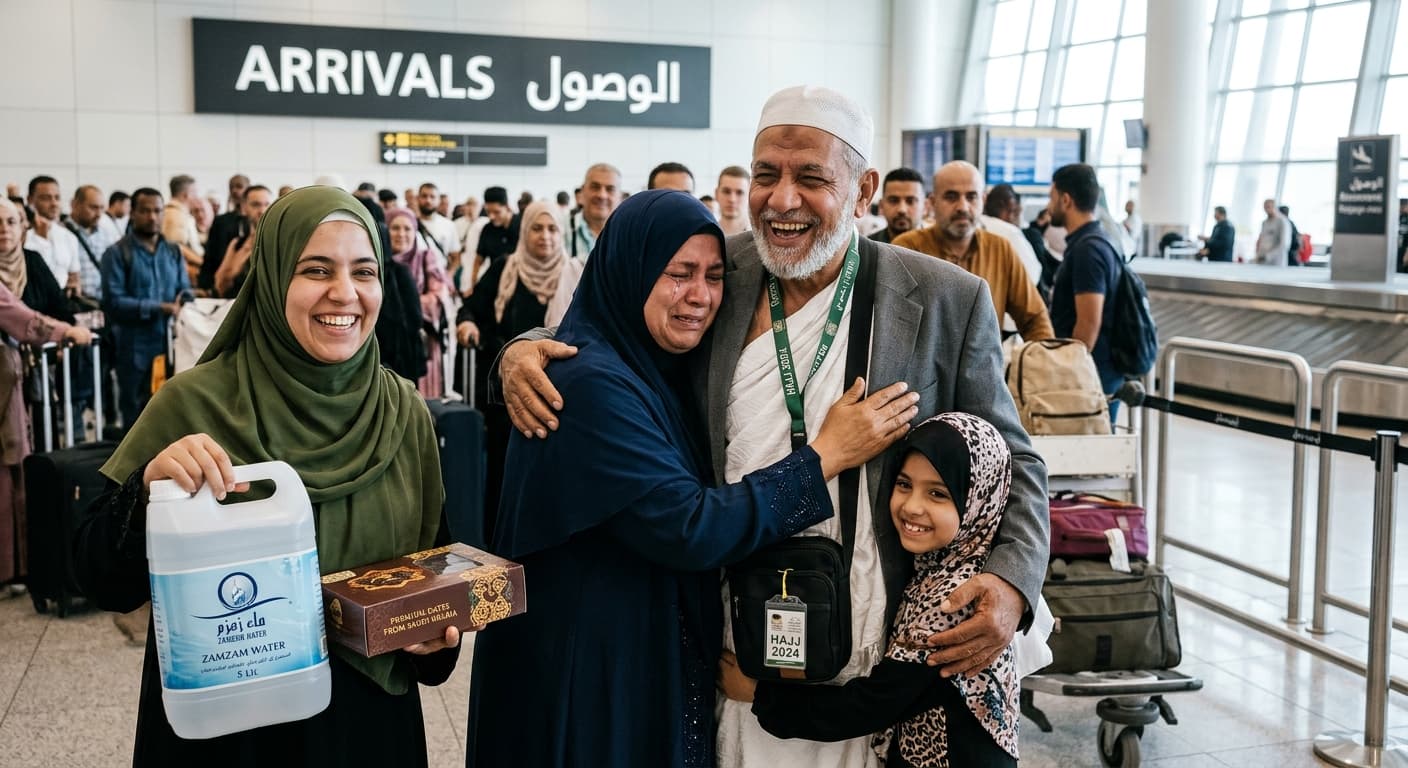
The part nobody prepares you for
Most of the advice about Hajj stops at the airport. Pack this, wear that, don't miss the bus to Mina. Returning from Hajj gets maybe two paragraphs tacked onto the end of every guide, usually something vague about "reflecting on the journey." That's not enough, because the week after you land is where most of the actual change either sticks or quietly disappears.
Here's the thing: the rituals are finished before you board the plane. What's left is etiquette, a few practical loose ends, and a decision — whether you treat Hajj as something that happened to you, or something you now have to live up to.
What's actually left to do, ritually speaking
Almost nothing, and that surprises people. The last required act is Tawaf al-Wida, the farewell circuit of the Kaaba, performed in Makkah before you travel home. Once that's done and you've left the Haram, the ritual obligations of Hajj are closed. There is no ceremony waiting for you at home, no final step your family needs to arrange.
That said, there's a strong tradition around how you arrive. The Prophet (peace be upon him) had a habit of saying a specific dua on returning from any journey — thanking Allah for a safe return and asking that the deeds of the trip be accepted. Saying this quietly as you walk back into your own house, rather than performing it for an audience at the airport, is closer to how it was practised.
A short list, not a ritual checklist
Say the returning-traveller dua when you reach your own neighbourhood or home, not necessarily the second you land.
Thank anyone who looked after your affairs, your home, your business, or your dependents while you were away.
Settle any small debts or promises you left pending before departure — Hajj doesn't erase what you owe people.
Welcoming a Hajji home without turning it into a show
Families often go one of two ways. Either a huge reception with banners and biryani for two hundred guests, or total silence because nobody's sure what's appropriate. Neither is required. The etiquette around welcoming a Hajji home is simple: greet them warmly, ask them to make dua for you, and keep the gathering modest.
There's a reason for asking the dua part specifically. A pilgrim who has just completed Hajj is considered, in Islamic tradition, to be in a state where their supplications carry extra weight for a short period. Ask for it directly rather than assuming it'll happen on its own.
Sharing zamzam water and dates brought back from the trip is the one custom worth keeping. It's cheap, it's simple, and it gives the gathering a point beyond just food and conversation.
What people get wrong about returning from Hajj
The biggest mistake is treating the title "Hajji" as a finish line. It isn't. One widely known hadith describes a Hajj performed properly as returning someone to the spiritual state of a newborn — but a newborn still has to grow up. The forgiveness is a starting point, not a trophy.
The habits you build in the first month after returning from Hajj matter more than anything you felt standing at Arafat.
That's an uncomfortable thing to say, because the emotional peak of Hajj happens during the trip, not after it. But emotion fades fast. What decides whether the trip actually changed anything is boring: do you still pray on time in week six, or did that slip back to where it was in March? Did the habit of charity you picked up in Makkah survive contact with your regular bank balance?
Practical reflection, not vague reflection
Skip the generic journaling advice. Instead, write down three specific things: one sin you want to stop, one good habit from the trip you want to keep, and one person you need to repair a relationship with. Review it in thirty days. Most people who do this find the habit has already slipped by day fifteen — which is exactly why the thirty-day check matters.
The paperwork side nobody mentions
If you travelled through official channels, there's housekeeping that doesn't get talked about much. Group leaders are supposed to confirm your return with the Ministry of Religious Affairs, and your passport should carry a correct exit stamp — mismatched records have caused delays for people applying again in future years. It's worth checking this within a week of landing, while your group organiser still remembers your file.
If you attended an official Hajj training session in Pakistan before departure, it's worth pulling out those notes again now. A surprising amount of that material covers what happens after you're home, not before you leave, and most people skim past it the first time because the pre-trip logistics feel more urgent.
The visa process for Hajj in Pakistan is built around a single round trip, so your visa closes out when you land. That's fine unless there's a discrepancy in your travel dates, in which case it can complicate a future application. Check your passport now, not next year when you're trying to register again.
Area | What to check or do | Timing |
|---|---|---|
Exit stamp / visa closure | Confirm passport shows correct exit, no mismatches | Within 7 days of landing |
Qurbani (if deferred) | Confirm with group organiser it was completed or rearrange | Within 2 weeks |
Zakat and debts | Settle anything postponed before travel | Within 30 days |
Habit tracking | Write down 3 specific changes, review them | 30-day check-in |
Future registration | Keep documents filed in case you apply again | Ongoing |
If you went through one of the government Hajj packages available in Pakistan, don't assume your group leader filed everything correctly just because the trip went smoothly. Ask directly. It takes one phone call and saves a headache if you decide to apply again in a few years.
On that note, hold onto your paperwork. The list of documents required for Hajj registration doesn't change drastically year to year, and having your old file ready saves you re-collecting everything from scratch if a family member wants to go next.
Do you need to go again?
Short answer: no, and often the better move is to not. Hajj is Farz on every adult Muslim who is physically and financially able, and that obligation is now closed for you. Plenty of scholars actively discourage repeating Hajj every year when the same money could fund someone else's first trip, or go toward family needs at home.
That's not a popular opinion in every circle, where repeat Hajj is sometimes treated as a mark of piety. But the first-time obligation and the repeat trip are not the same category of act, and conflating them misses the point of why Hajj was made farz in the first place.
What this actually comes down to
Returning from Hajj is quieter than the trip itself, and that's exactly why it's easy to get wrong. There's no crowd, no set of stations to move through, nobody checking whether you're doing it right. Just your own house, your own routine, and the question of whether anything about you is genuinely different six months from now. Nobody can answer that one for you.