
Hajj Training session in Pakistan
Every intending pilgrim in Pakistan sits through a Hajj training session before travel, but most walk out having absorbed maybe a third of it. Here is what the sessions actually cover, what they leave out, and how to use the one you attend.
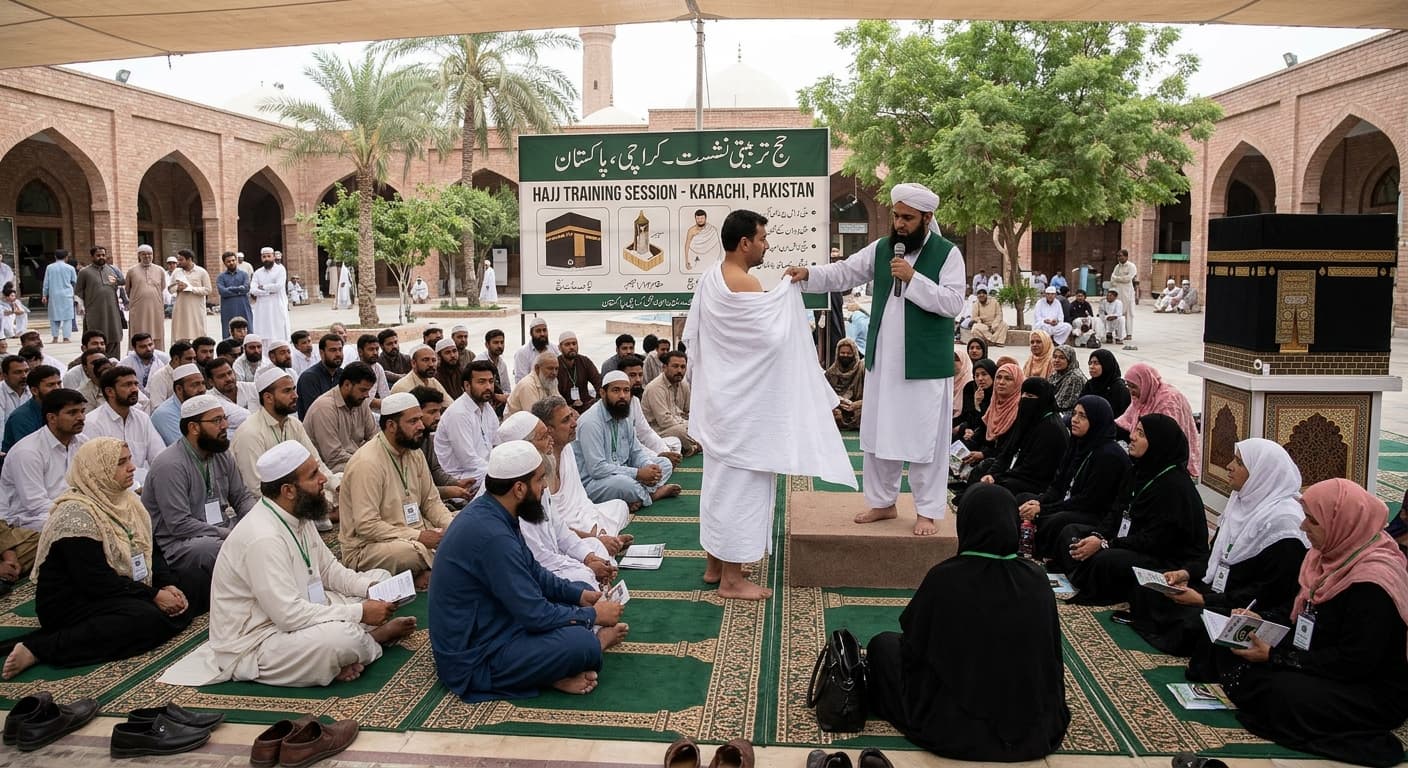
The Hajj training session nobody takes seriously enough
Somewhere between registration and departure, every intending pilgrim in Pakistan gets called to a Hajj training session. Most people treat it as a formality, a box to tick before the real preparation starts. That's backwards. The session is often the only structured chance you get to ask questions out loud, in your own language, before you're standing in Jeddah airport trying to remember what tawaf actually involves.
These sessions are organised by the Ministry of Religious Affairs through its provincial and district Hajj offices, usually in the two to three months before the Hajj flights begin. If you're on a government scheme, attendance gets logged against your registration number. If you're going through a private operator, the quality of the session depends entirely on who that operator hired to run it, and that varies more than it should.
What the Ministry actually puts in front of you
A typical Hajj training program in Pakistan runs three to four hours and covers a fixed set of topics: the state of ihram, the sequence of rituals from the eighth of Dhul Hijjah onward, health advisories (heatstroke, Meningitis vaccination proof, medication rules at Saudi customs), and a walkthrough of what the Saudi immigration process looks like on arrival. Some sessions bring in a retired Hajj officer who has done the route himself, which tends to be the most useful forty minutes of the whole thing because he'll mention the stuff the printed manual skips.
The printed guide you're handed at the end is almost always more thorough than the spoken session, so don't throw it away once you've left the hall.
Where the gap actually is
Here's the part the official Hajj guidelines in Pakistan rarely spend enough time on: logistics before you ever reach Saudi Arabia. Visa processing, document checklists, final cost breakdowns — these get a slide each, not a session each. If you want the detail the training leaves out, it's worth reading through what the visa process for Hajj in Pakistan actually involves before you sit through the orientation, not after. You'll ask better questions if you already know what a Nusuk visa approval looks like versus what a rejection notice looks like.
Cost is the other thing people walk into the session confused about, because the number quoted at registration almost never matches what you end up paying once additional charges land. The session leaders usually just repeat the official figure. For the real arithmetic, including the add-ons nobody mentions out loud, it's worth checking how much Hajj 2027 actually costs in Pakistan separately, because that's a conversation the training session has no mandate to have with you.
Government scheme or private: the session looks different either way
If you're trying to decide between a government package and a private operator before your training session even happens, that decision shapes what the session will look like for you. Government batches are larger, so the sessions are more generic and rule-heavy. Private batches are smaller, and the training often folds into a group orientation run by the tour operator itself, with more hand-holding but less consistency. Comparing the government Hajj packages available in Pakistan against a private scheme before you register changes which kind of training session you'll end up sitting through.
Aspect | Government scheme session | Private operator session |
|---|---|---|
Group size | 80 to 200 pilgrims | 15 to 40 pilgrims |
Instructor | District Hajj officer, often rotating | Fixed tour guide, sometimes the same person who travels with the group |
Depth on rituals | Standard, scripted | Varies widely by operator |
Visa and document help | Checklist only | Sometimes one-on-one review |
Language | Urdu, occasional regional language | Usually Urdu plus the operator's local dialect |
Documents: the session that's really a document audit
One part of the Hajj pilgrims orientation that's actually worth your full attention is the document check, because this is where missing paperwork gets caught before it becomes an airport problem. Passport validity, the vaccination certificate, photographs in the exact specification Saudi authorities want — these get checked against a list, and the list is strict about format, not just presence.
What to actually do in the room
Don't just sit through it. Take notes on the sequence of rituals specifically, because that's the part people forget under heat and crowd stress in Mina and Arafat. Write down the name of at least one instructor or officer you can contact afterward, because phone numbers get handed out verbally and forgotten within a week.
Ask about Jamarat timing for your specific group number if it's mentioned, since batch timing for the stoning ritual changes year to year and the session is the only place this gets confirmed in person rather than through a circulated notice.
If you're attending with elderly family members, ask the session organiser directly whether a wheelchair-assisted group exists, because this isn't always volunteered and it changes which tent assignment you get in Mina.
Where the sessions genuinely fall short
Nobody really teaches crowd navigation in a three-hour session, and that's the single thing that catches first-time pilgrims off guard the most. Knowing the rituals in sequence is one thing. Standing in a crowd of two million people during Hajj, trying to find your group's flag in Mina at 2am, is a different skill entirely, and no training hall can simulate it. The honest answer is that some of this you only learn by being there, and the session can only get you partway.
Which brings up the open question nobody in these sessions wants to answer directly: whether a three-hour briefing can ever really prepare someone for the physical and emotional weight of the actual days of Hajj. Probably not fully. But it closes the gap more than skipping it would, and that's the honest case for going even when the hall is hot and the microphone keeps cutting out.
One last thing about the Hajj training session itself
Treat the session as a working document, not a lecture. Bring a pen, bring your document file, and bring the questions you couldn't find answered online. The Hajj training session won't make the hardship of the journey disappear, but it does mean you won't be improvising the ihram steps for the first time while standing at the miqat, phone in hand, trying to remember a slide from three months ago.